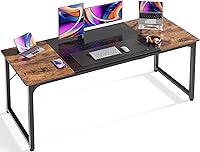
Solid Wood vs Laminate Desk: Which Is Better? (October 2026)
Choose solid wood when the wood itself matters; choose a laminate-finish desk when its surface, storage and layout suit your work. Compare the core materials, dimensions and features before deciding.
On this page (9 sections)
- Solid wood vs laminate desk: how do they differ?
- Which desk fits your work and storage needs?
- When should you choose solid wood?
- When does a laminate finish make sense?
- Does a walnut tone require an all-solid-wood desk?
- Which desk is easier to care for?
- How should you set up the desk?
- What mistakes should you avoid?
- Which desk should you choose?
A solid wood vs laminate desk comes down to construction, surface and features: choose solid wood when the wood itself matters, or a laminate-finish desk when its finish and storage suit your work. Compare the core materials as well as the look, because a wood pattern does not prove the desk is made from solid wood.
A desktop is a daily work surface, so consider what you place on it, how you organize supplies and how much room you can spare. The desk that looks right may still be a poor fit if it leaves too little space for your chair, monitor or keyboard.
The Solid Wood Desk with Drawers offers solid wood construction and multiple drawers. The Sauder Computer Desk in Brushed Maple uses engineered wood and adds a keyboard shelf, file drawer and enclosed storage, while the Linon Melissa Walnut Desk combines solid wood and veneer in a smaller footprint.


Solid wood vs laminate desk: how do they differ?
Solid wood names a material; laminate names a surface finish. They describe different parts of a desk, so compare both before deciding.
Solid wood means the desk is built with solid wood, though a specific desk may still combine wood with other materials. Laminate is a finished surface attached to a core, which may be engineered or manufactured wood.
The word “wood” in a finish name describes appearance, not necessarily the material underneath.
The Sauder is engineered wood with a Brushed Maple finish. It gives the room a maple look without being a solid wood desk.
The ODCVKRT desk is described as solid wood. The Linon Melissa combines solid wood and veneer, so it is a mixed-material choice rather than an all-solid-wood build.
What should you check on a solid wood vs laminate desk?
Check the top, frame and base materials separately, then look at the finish. This helps you tell whether the desk meets your material preference and whether its appearance works in the room.
A desk can use different materials in its top and legs. If you care about solid wood construction, look for a clear material description rather than relying on a name such as “maple” or “walnut.”
Some desks use manufactured board under a decorative surface. Our guide to particle board desks explains that material in more detail, and our wood computer desk guide covers other wood construction options.
Which desk fits your work and storage needs?
Choose a desk by the tasks, equipment and supplies you need to fit. Make a short list of what must stay on the top and what should go in drawers.
A useful layout leaves room for your monitor, keyboard, mouse and writing space. Also consider whether you want quick access to paperwork, a clear tabletop or a place to tuck smaller items out of sight.
The ODCVKRT desk and Linon Melissa both include drawers, but their storage layouts differ. The ODCVKRT has multi-drawer storage for daily items, while the Linon has one center drawer for supplies.
The Sauder is the storage-heavy option here. It has two drawers, a long file drawer, a storage area behind a door and a slide-out keyboard and mouse shelf.
The drawer can hold letter or European size hanging files, and a grommet provides cord access.
When should you choose solid wood?
Choose solid wood when you want solid wood construction and a natural wood surface is a priority. The ODCVKRT desk pairs that build with multiple drawers and rounded corners.
It measures 47.2 in wide, 21.7 in deep and 29.5 in high. That footprint may suit a compact office or bedroom if your equipment fits within the top, but measure the usable space before buying.
The fixed height matters if you need a particular fit with your chair. Check the seated position and keyboard height, and use our computer desk height guide to think through the measurements.
This desk is a sensible match for someone who wants solid wood and storage in one piece. Skip it if you need an adjustable height or a footprint smaller than its stated width and depth.
Solid wood does not automatically mean that every surface can be treated the same way. Follow the desk’s care instructions, use coasters or desk mats where they suit your routine, and wipe spills promptly rather than letting moisture sit.
When does a laminate finish make sense?
Choose a laminate-finish desk when its surface look and built-in features fit your room and routine. The Sauder pairs a Brushed Maple finish with storage and a slide-out shelf.
The shelf can move the keyboard and mouse off the main work surface when you want more room above. Its storage can suit someone who keeps folders and paperwork nearby, especially if a file drawer is more useful than an open shelf.
The Sauder’s exact dimensions are not included here. Measure your available area and confirm the desk’s footprint before you plan around it, particularly if you need to fit it between walls or beside other furniture.
A wood-look laminate can be a good choice when you want a consistent finish and practical storage. Skip this option if solid wood construction is a firm requirement, or if you cannot verify that its dimensions and surface care suit your setup.
Does a walnut tone require an all-solid-wood desk?
No; you can choose a walnut appearance with a mix of materials. The Linon Melissa combines solid wood and veneer in a compact desk with a center drawer.
At 42 in wide and 19 in deep, it has a smaller stated footprint than the ODCVKRT desk. Its single center drawer keeps supplies close, but it offers less built-in storage than the Sauder’s drawers and file space.
This desk fits someone who wants a walnut tone and modest storage in a smaller work area. Its stated weight capacity is 100 lb, so account for your monitor and equipment together, and skip it if you need a larger surface or multiple drawers.
Veneer is a thin wood layer used over another material. It can provide a wood appearance, but it is different from having solid wood throughout, so read construction details carefully when that distinction affects your choice.
Which desk is easier to care for?
Pick the desk whose care instructions you can follow with your normal cleaning routine. Material labels alone do not give a complete cleaning method.
The ODCVKRT tabletop is described as smooth, non-slip, wear-resistant and easy to clean. That description applies to this desk; use its care directions and do not assume every solid wood desk has the same finish or cleaning needs.
For a laminate surface, use the instructions for the exact desk and finish. A soft cloth and prompt cleanup are sensible habits for many desk surfaces, but check before using sprays, solvents or abrasive pads.
Protect the surface from scratches by lifting equipment instead of dragging it. A desk mat can help contain everyday scuffs from a keyboard and mouse, while coasters can help keep drink rings off the work area.
How should you set up the desk?
Place the desk where you can sit comfortably, reach your equipment and open its storage. Check clearances before assembling it.
Measure the desk area, chair space and route into the room, including doorways and tight turns. A desk that fits the final spot may still be hard to carry through the entry path.
Set the monitor where you can view it comfortably, then place the keyboard and mouse within easy reach. On the Sauder, the slide-out shelf changes where those items sit, so check that the shelf height and available knee space work for you.
Before loading drawers, assemble the desk on a level floor and tighten its fasteners as instructed. Put heavier items where the desk’s design supports them, and avoid placing equipment beyond the stated weight limit when one is given.
For a broader layout plan, see our computer desk setup guide. If paperwork is a regular part of your day, the guide to desks with file cabinets can help you decide whether built-in filing is worthwhile.
What mistakes should you avoid?
Avoid choosing by the finish name alone. A maple or walnut look does not tell you whether a desk is solid wood, veneer or engineered wood.
Another common mistake is measuring only the desktop. Allow for the chair, drawers, door swing, cables and the walking path around the desk.
The Sauder’s dimensions are not included here, so confirm them before committing to its storage layout.
Don't assume more storage is always better. Extra drawers and a file cabinet take up space, while a single drawer may be enough if you keep most work materials elsewhere.
Finally, don't treat “easy to clean” or “wear-resistant” as permission to use any cleaner or leave spills on the surface. Follow the care directions for the specific finish and wipe up messes promptly.
Which desk should you choose?
Pick the ODCVKRT if solid wood and multiple drawers are your priorities; pick the Sauder if file storage and a keyboard shelf matter most. Choose the Linon Melissa if you want a walnut tone, a center drawer and the smallest stated footprint of these three.
A solid wood vs laminate desk decision is easier when you rank construction, surface, footprint and storage in that order. If the wood material is essential, confirm the full construction; if practical features lead, choose the desk whose storage and layout fit your workday.
- {{product B07FDJT6DC | A walnut tone and center drawer in a 42 x 19 in desk with solid wood and veneer construction.}}
- {{product B0DY7J553J | Solid wood construction and multi-drawer storage in a desk that measures 47.2 x 21.7 in.}}
- {{product B004G7RN1C | A Brushed Maple finish, file drawer and slide-out keyboard and mouse shelf for a storage-focused workspace.}}
Frequently asked questions
Is a solid wood desk better than a laminate desk?
A solid wood desk is the clearer choice when you specifically want solid wood construction. A laminate-finish desk can suit you when its appearance, storage and work layout matter more.
Compare the top, frame and base materials, then check the dimensions and features against your room and routine.
Is a laminate desk made from solid wood?
Not necessarily. Laminate describes a surface finish, and the desk underneath may use engineered or manufactured wood.
Check the material for the top, frame and base separately; a wood-pattern finish alone does not identify the desk’s core construction.
How should you care for a solid wood or laminate desk?
Follow the care instructions for the exact desk and finish. The ODCVKRT desk has a smooth, non-slip, wear-resistant tabletop described as easy to clean.
For other surfaces, use the maker’s recommended method and avoid harsh cleaners unless the care guide says they are suitable.
Which desk fits a small room?
Compare the full footprint with the room and your chair space. The Linon measures 42 x 19 in, while the ODCVKRT desk measures 47.2 x 21.7 in.
Leave room to sit, move and open drawers, and confirm the Sauder’s dimensions before choosing it.
Does a desk with a laminate finish need assembly?
Assembly depends on the model and its design. The Sauder includes instructions and uses a T-slot drawer system; the Linon requires some assembly, and the ODCVKRT desk includes tools and instructions.
Plan to assemble the desk near its final location if moving it afterward would be difficult.