Metal vs Wood Desk: Which Frame Is Better? (October 2026)
Choose a metal frame for a mixed-material desk or wood legs for a wood-base look. For metal vs wood desks, compare the top, size, storage and stated weight limit with your room and setup.
On this page (9 sections)
- Metal vs wood desk: what changes when you choose a frame?
- Who should choose a metal frame, and who should skip it?
- Who should choose wood legs, and who should skip them?
- How should you match desk size to your room?
- What should you consider about desktop material?
- How do you set up and care for a metal or wood desk?
- How much weight should a metal vs wood desk support?
- What common mistakes should you avoid when choosing a desk?
- Which metal vs wood desk should you choose?
For a metal vs wood desk, choose metal legs for a metal base and wood legs for a wood-base look. The right choice also depends on the desktop material, available space, storage and the load your workstation needs to support.
“Metal desk” and “wood desk” can describe only the frame, not the whole piece. A metal frame may hold a particleboard or engineered wood top, while a desk with wood legs may have an MDF surface.
These 4 desks show why the frame and top deserve separate checks. Their materials and sizes help you compare options without treating a finish name as a full description.


Metal vs wood desk: what changes when you choose a frame?
A metal frame gives you a metal base, while a wood frame gives you a wood base; neither label identifies the desktop by itself. Check the frame, top and any storage separately before deciding.
The VASAGLE desk has a steel frame and particleboard top. The LVB pairs a metal frame with engineered wood, while the NELYE has solid wood legs and an MDF top.
The Solid Wood Desk with Drawers is described as solid wood. Across these examples, “wood” may refer to the frame, the top or both.
That distinction affects how you shop. If you want the appearance of wood but prefer metal legs, a mixed-material desk may fit; if you want wood legs, check what material covers the work surface.
Which metal vs wood desk parts should you check?
Check the frame material and the desktop material as two separate choices. A “wood” label could mean solid wood, MDF, particleboard or engineered wood, and those terms do not describe the same construction.
Then look at the design and dimensions. A desk that fits your preferred style may still be too narrow for your monitor arrangement, too deep for the room or short on storage.
Think about the parts you will touch and use every day. The top is where your keyboard and other equipment sit, while the legs and frame affect the desk’s look and how it fits around nearby furniture.
Who should choose a metal frame, and who should skip it?
Choose a metal-frame desk if you want visible metal legs or a mixed-material design. Skip that style if you specifically want wood legs or a desk made entirely from solid wood.
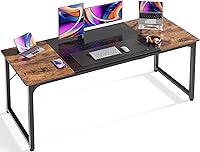
The VASAGLE pairs a steel frame with a rustic brown wood grain particleboard top. Its 63 in width suits a buyer who needs room for monitors, a keyboard and daily items, provided the desk fits the room.
The LVB is another mixed-material option, with a metal frame and engineered wood top. Its 59.1 in width is slightly shorter than the VASAGLE, while its adjustable feet can help balance it on an uneven floor.
A metal frame does not make every desk alike. Compare the exact desk’s dimensions, top material and weight guidance rather than assuming that any metal base will support the same setup.
Who should choose wood legs, and who should skip them?
Choose wood legs if you want a wood base that coordinates with other furniture. Skip a wood-leg design when a metal base is a firm style preference, or when its dimensions and storage do not work for your setup.
The NELYE has solid wood legs and an MDF top. At nearly 63 in wide but under 20 in deep, it gives you a long, slim surface for a room where front-to-back space is limited.
The Solid Wood Desk with Drawers is a better match when you want drawers and a smaller desktop. It measures 47.2 in wide and 21.7 in deep, so make sure that gives you enough usable space before choosing it.
Wood legs do not guarantee a solid wood desktop. For more frame and finish options, browse our guide to wood computer desks; for a closer surface comparison, see particleboard desks.
How should you match desk size to your room?
Measure the available width and depth, then compare those numbers with the desk and your equipment. Frame material cannot compensate for a top that is too shallow or a desk that blocks a walkway.
The VASAGLE measures 63 x 23.6 x 29.9 in in width, depth and height. The LVB is 59.1 x 23.6 x 29.7 in, and the Solid Wood Desk with Drawers is 47.2 x 21.7 x 29.5 in.
The NELYE is 62.99 x 19.69 x 29.53 in. It is nearly as wide as the VASAGLE, but its shallower surface gives you less front-to-back room for a monitor and keyboard.
Measure the footprint you can spare, including any clearance needed to sit down and pull out a chair. Check doorways and the route to the final position as well, especially if you plan to assemble the desk elsewhere.
Use our guide to computer desk depth to compare the top with your setup. For a closer look at common widths, see computer desk widths.
What should you consider about desktop material?
Choose the desktop material you want to live with, rather than relying on the frame label. These options include particleboard, engineered wood, MDF and a desk described as solid wood.
A wood grain finish can give a particleboard top a wood look, as on the VASAGLE. That does not make its surface solid wood, so it may not suit someone who wants solid wood construction throughout.
The LVB has an engineered wood top, and the NELYE has an MDF top. The Solid Wood Desk with Drawers is described as solid wood, which makes it the clearest option here for a buyer prioritizing that material.
Care for each surface according to its finish and avoid leaving spills or damp items on the desk. For more on the difference between surface types, read solid wood vs laminate desk.
How do you set up and care for a metal or wood desk?
Assemble the desk on a clear, level area, follow its instructions and check that each fastener is secure. Once it is in place, balance the desk on the floor and keep the surface clean and dry.
Before assembly, confirm that the parts and hardware are present and that you have room to work. Keep the instructions close, and avoid tightening parts in a way that forces the frame out of alignment.
If the desk includes leveling feet, use them to address an uneven floor and to help protect the floor from scratches while adjusting the desk. The VASAGLE and LVB have adjustable feet; the VASAGLE also includes numbered parts and step-by-step instructions.
For daily care, wipe up spills promptly and use a cleaning method that suits the surface finish. Avoid assuming that a cleaner intended for a metal frame is right for a wood or wood-based top.
Recheck the desk after moving it or changing its setup. If it feels unstable, check that the floor is level, the feet are set evenly and the assembly hardware is secure.
How much weight should a metal vs wood desk support?
Choose a desk with a stated weight limit that covers the equipment you plan to keep on it. Do not assume the frame material alone tells you how much load the complete desk can handle.
The VASAGLE has a maximum weight recommendation of 50 kg. That limit applies to this desk, not to steel-frame desks in general.
The other three desks here do not have a comparable weight limit in the available specifications. Check the weight guidance for the particular desk if your setup includes several monitors, speakers or other heavy equipment.
List the items that will stay on the surface and estimate their combined weight before you buy. Leave room for anything you may add, keep the load within the stated limit and follow the assembly instructions.
What common mistakes should you avoid when choosing a desk?
The main mistake is treating “metal” and “wood” as complete descriptions of a desk. Check the actual frame, top, size, storage and weight guidance instead.
A second mistake is choosing by width alone. The NELYE is almost 63 in wide, but its depth is 19.69 in, so compare both dimensions with your monitor and keyboard placement.
Do not assume a wood-look surface is solid wood or that wood legs mean a wood top. The VASAGLE has a particleboard top, the LVB has engineered wood, and the NELYE has an MDF top.
Finally, avoid buying before measuring the room and planning the setup. Confirm the desk will fit its destination, leave enough room for your chair and suit the equipment you intend to use.
Which metal vs wood desk should you choose?
Choose the VASAGLE if you want a wide steel-frame desk with a wood grain particleboard top, or the Solid Wood Desk with Drawers if you want a smaller solid-wood option with storage. Choose the LVB for a metal-and-engineered-wood mix, or the NELYE for a long desk with wood legs and a slim depth.
Skip the VASAGLE if you need a solid wood top or its fixed height does not suit you. Skip the NELYE if you need a deeper work surface, and skip the smaller drawer desk if your setup needs more width.
Before choosing, measure the room, compare the work surface with your equipment and confirm the desk’s weight guidance. If a wood base is your priority, our wood computer desk guide can help you compare more styles.
Frequently asked questions
Is a metal or wood desk frame stronger?
Frame material alone doesn't determine how much a desk can support. Compare the construction and stated weight limit for the specific desk with the weight of your monitors, computer and other gear.
A metal frame may carry a particleboard top, while a wood-framed desk may pair wood legs with MDF.
Does a metal desk frame wobble less?
A metal frame doesn't guarantee a wobble-free desk. The frame design, tight fasteners, level floor and careful assembly all affect movement, so check the desk after assembly and use leveling feet if included.
If it still moves, see our guide on how to fix a wobbly desk.
Is a wood desk top always solid wood?
No. A desk can have wood legs and an MDF top, or a metal frame with a particleboard or engineered wood top.
Check the frame and surface as separate parts.
Our guide to solid wood vs laminate desks explains why the surface material matters.
How do I choose between a metal and wood computer desk?
Start with the full construction, dimensions, storage and weight guidance. Choose the frame style you prefer, then confirm that the desktop material and size suit your equipment and room.
Our wood computer desk guide covers wood styles and options.