Computer Desks That Work in a Living Room
A computer desk for a living room should fit the space without making the room feel like an office. Measure the wall or corner, plan where work items will go after the day ends, and choose a shape and finish that sit well with the furniture around it.
On this page (7 sections)
- Where should a computer desk go in a living room?
- What size computer desk fits a living room?
- Which desk features help a living room stay tidy?
- Which computer desks can work in a living room?
- How can you make a living room desk fit the room?
- What should you measure before choosing a living room desk?
- How do you choose a computer desk for a living room?
A computer desk for a living room should fit the space without making the room feel like an office. Measure the wall or corner, plan where work items will go after the day ends, and choose a shape and finish that sit well with the furniture around it.
The right choice depends on how often you work there and what needs to stay on the desk. A compact surface may suit a laptop, while a monitor, printer and supplies need more room.
Before choosing a style, measure the area and look at the paths people use through the room. For other small-room ideas, see our guide to fitting a computer desk in a bedroom.
Where should a computer desk go in a living room?
Place the desk along an open wall or in a usable corner, where it won't block a doorway or the room's main path. A good location leaves space for the chair and keeps work gear from taking over shared seating.
Mark the desk's full width and depth on the floor with painter's tape. Add the chair area behind it, then check whether people can still pass through comfortably.
Look at what the desk faces, too. A spot near an outlet may reduce the need for a long cable route, while a position away from the TV or a bright window may make it easier to focus.
If the desk will share space with a sofa or dining area, consider what it looks like from those seats. A visible work surface can feel busy when it holds papers, chargers and equipment, so plan a place to put those items away.
What size computer desk fits a living room?
Choose the smallest desk that holds your equipment and leaves room to work. Measure the available wall or corner before comparing desk dimensions, and check depth as well as width.
| Desk shape | Room fit | Consider it when |
|---|---|---|
| Narrow straight desk | Uses a smaller stretch of wall | You have a laptop or a limited setup |
| Compact straight desk | Keeps the footprint moderate | You need a little more surface or storage |
| Corner desk | Uses an open corner | The corner is accessible and the chair can move |
| Wide desk | Takes more wall space | Your setup includes multiple items or a printer |
The desk dimensions below are examples, not general size limits. Compare any option with your own room measurements and furniture.
Is a narrow computer desk enough for living room work?
A narrow computer desk can suit a laptop and a few daily items if its depth leaves room for your hands and accessories. It may feel cramped if you use a large monitor, keep notebooks open or need space for a lamp.
Make a quick inventory of what stays on the surface during work. Include the monitor stand, keyboard, mouse, notebooks and any equipment you use every day.
Then compare that arrangement with a desk's usable dimensions. Our guide to computer desk depth and width explains what to consider when sizing a work surface.
When does a corner desk make sense?
A corner desk makes sense when you have a clear corner and want the work area to take up less of the main wall. It can also make use of space that isn't useful for a sofa or cabinet.
Check the shape and measurements carefully. A triangular surface may fit a corner but offer a different work area from a rectangular top, and the chair still needs room in front.
The desk should not force you to sit in a walkway or block access to a window, cabinet or door. If you have no suitable corner, a narrow desk may be easier to place.
Which desk features help a living room stay tidy?
Choose storage based on what you need to put away when work is done. Drawers and cabinets can conceal supplies, while shelves keep things visible and close at hand.
Power built into a desk can reduce the need to reach for an outlet, but cables still need a clear route. Keep cords away from walking paths and leave enough slack for devices to move safely.
Think about the items you want to store: papers, headphones, chargers, books or a printer. A large desk with storage can take up more floor and visual space, so weigh the convenience against the room's available area.
For a smaller room, a simple surface may be easier to blend in. Our guide to narrow computer desks covers when a slim shape makes sense, and computer desks with wheels explains what to consider if you need to move a desk.
Which computer desks can work in a living room?
These four options offer different shapes, sizes and storage arrangements. Match the desk to the room's layout and the equipment you use, rather than choosing by appearance alone.
Our score weighs specs and features against what you're shopping for.
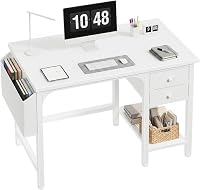
DLisiting White 47-Inch Desk with Hutch
This white desk measures 47.2 in wide, 18.9 in deep and 56.1 in high, with a hutch and three fabric drawers. The hutch adds vertical storage, so check the full height and make sure it won't crowd a window or wall decor.
Its built-in outlets include 3 AC outlets and 2 USB ports. The white finish may suit a room with light furniture, but compare it with the colors already in the space.
Score: 7.9. Best for compact storage with built-in outlets.
Consider it if you want raised storage.
Skip the hutch style if you prefer a clear wall or want to keep items out of sight.
TVU 65-Inch Farmhouse Desk with Printer Stand
This 65 in wide desk has a brown and white farmhouse finish, three wooden drawers, a cabinet with adjustable shelves, a printer rack and an open partition. Its 18.9 in depth is worth checking against your available wall space.
The built-in power strip has 2 sockets and 2 USB ports. The desk also has a raised monitor stand, so include its height and layout in your room plan.
Score: 7.6. Best for a wide desk with printer storage.
Consider it if you want storage and a place for a printer in one wide desk.
Check that the 65 in width works alongside nearby furniture and that the storage fits your work supplies.
SEDETA Farmhouse Small Corner Desk
This gray triangular corner desk measures 44.5 in wide, 31.5 in deep and 31.5 in high, with a drawer and open lower shelves. Its corner shape can use an open corner without spanning a long wall.
Its wood construction and gray finish give you a different look from the white and brown straight desks here.
Score: 7.5. Best for an available living room corner.
Consider it if an accessible corner is the best place for a work area.
Confirm that the triangular shape leaves enough room for your chair and the way you use the desk.
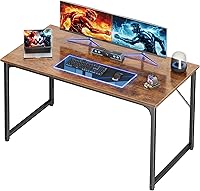
PRAISUN 55 x 20-Inch Rustic Brown Desk
This rustic brown desk measures 53.9 in wide, 19.7 in deep and 29.5 in high, with a metal frame and engineered wood surface. It has no drawers, so plan another place to store papers and small supplies.
Its built-in charging station has 4 AC outlets, 1 USB port and 1 USB-C port. The desk's open frame and lack of drawers may suit a room where you want a straightforward work surface.
Score: 7.5. Best for a simple desk with built-in charging.
Consider it if you want a wide desk with built-in charging and don't need desk drawers.
Measure the footprint and decide where cables and work items will go.
How can you make a living room desk fit the room?
Use the room's existing colors, furniture shapes and storage habits to guide your choice. A desk that matches the room's scale and has a clear place for work items can feel more at home in a shared space.
Choose a finish that works with the nearby furniture, but check the actual color description and images before buying. Words such as “rustic brown” or “white” can cover different shades and surface patterns.
Keep the desktop limited to the items you use often. Store papers and chargers in a drawer, cabinet or nearby basket, and route cables along the wall where they won't cross a walkway.
A chair also affects how the desk fits. Measure its width and how far it needs to slide back, especially if the desk sits near a sofa, dining table or passage.
What should you measure before choosing a living room desk?
Measure the desk location, chair space and access route before ordering. The desk must fit where it will be used and leave the room usable for everyone else.
- Measure the open wall or corner, including nearby trim and furniture.
- Compare both desk width and depth with the marked floor space.
- Check the desk's height against the chair and your preferred working position.
- Mark the chair area and test whether it blocks a doorway or common path.
- Check outlet locations and plan a cable route that avoids foot traffic.
- For a hutch or monitor shelf, measure the full height and nearby wall space.
If you are choosing a desk for a laptop or monitor setup, use the guidance in how high a computer desk should be and computer desk setup. The room fit matters, but the desk should also work for the way you sit and arrange your equipment.
How do you choose a computer desk for a living room?
Choose a computer desk for a living room by matching its footprint, shape and storage to the space and your work routine. Pick a corner desk if you have a clear corner, a narrow desk for a small setup, or a wider storage desk if your equipment needs room.
Measure the spot with the chair in place, then decide where supplies and cables will go after work. For more compact options, compare our compact computer desks guide.
Frequently asked questions
What kind of computer desk works best in a living room?
Choose a desk based on the room's open wall or corner, the equipment you need, and how much work gear you want to store out of sight. A corner desk can use an otherwise empty corner, while a compact desk can fit along a wall.
Measure the space and consider how the desk will look beside nearby furniture.
How do I make a computer desk look less like office furniture?
Choose a finish and shape that relate to the room's existing furniture, then keep the work surface clear when you're done. A desk with drawers or shelves can hold supplies, while a simple surface leaves fewer visual details.
Check the desk's actual color and dimensions against your room before you buy.
Is a corner computer desk a good choice for a living room?
A corner desk can work well when the corner is accessible and deep enough for the desk and chair. Check its width and depth, then make sure the chair can move without blocking a doorway or the main path through the room.
A triangular desktop may use a corner differently from a straight desk.
Should I get a computer desk with storage for a living room?
Storage helps if you want to put away notebooks, cables or other work items when the desk isn't in use. Drawers and a cabinet can hide some supplies, while open shelves keep items visible and easy to reach.
Match the storage to what you actually need to keep nearby.
How much space should I leave around a living room desk?
Leave enough room to pull out the chair, reach the desk and keep the room's usual paths clear. Measure the desk's width and depth, then mark its footprint on the floor and test the chair space.
Check nearby doors and furniture before settling on the location.